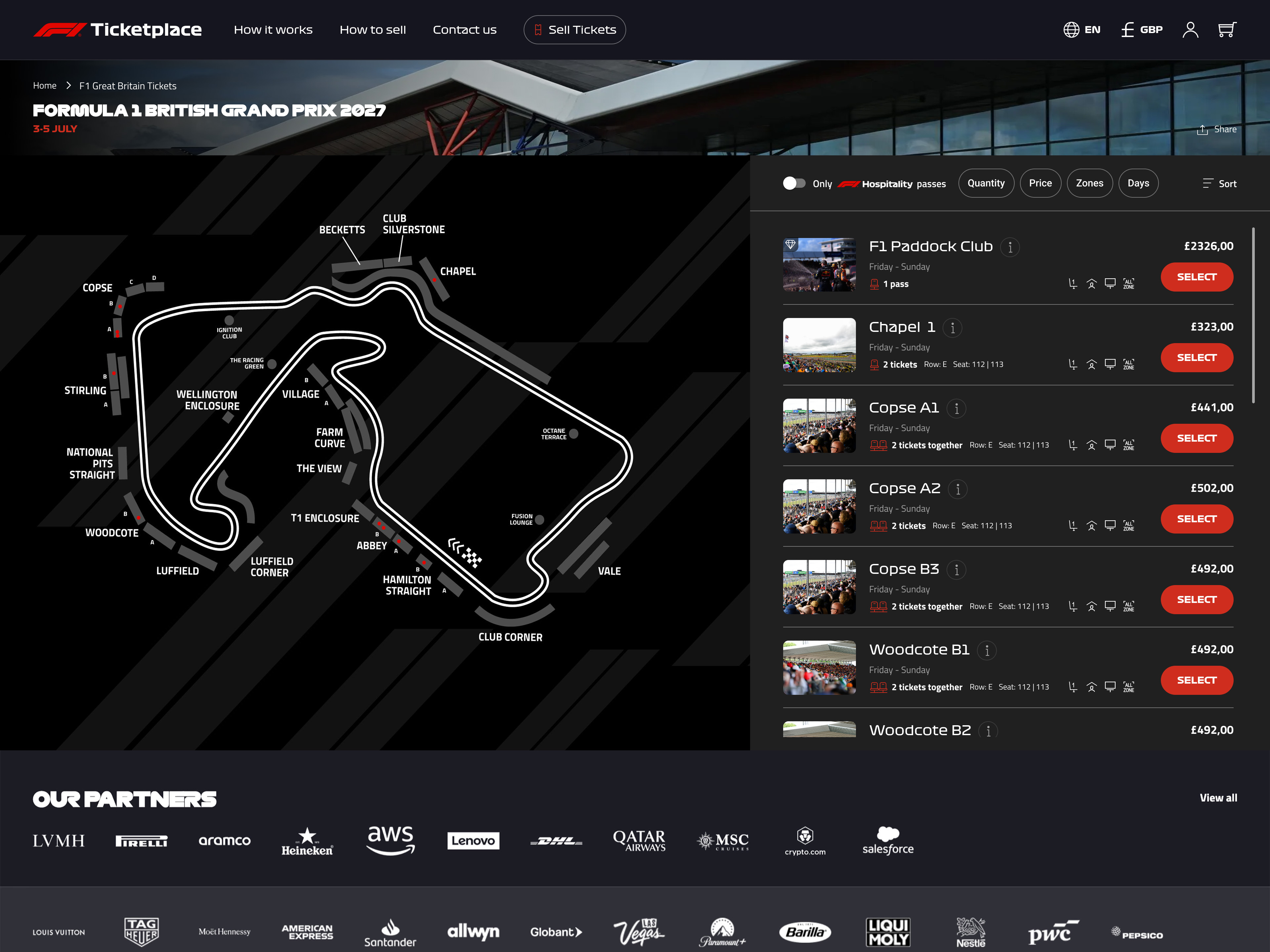
A competitive pitch to define the future of F1 ticketing.
In late 2025, Formula 1 Group launched a competitive RFP for a next-generation unified ticketing solution. Platinium Group — already operating Ticketshop for F1 events — entered with a full product vision and design proposal. The ambition: replace F1's fragmented ticketing landscape with a single, unified digital ecosystem connecting fans, promoters, F1 partners, and Formula 1 Group itself.
I led the design of the entire pitch — working in a tight senior circle with the Head of Product, Program Director, COO, and Head of Partnerships. No extended team. Every decision at senior level, fast. The timeline was measured in weeks, not months. The pitch tagline: "Connecting Every Stakeholder, Elevating Every Experience."
One ecosystem. Three products. Every stakeholder.
The proposal defined a modular ecosystem across three pillars. The F1 Ticketshop — a next-generation global storefront for every race, ticket type, and fan segment, built on a modular CMS with 3D venue mapping powered by GPS and Unreal Engine 5. Fans explore the circuit, select their grandstand, and pick specific seats with grandstand perspective views. A 2D fallback map ensures consistent experience across all 24 races, regardless of API connectivity.
The F1 Hospitality Control Centre — a unified B2B hub across 8 functional modules (Inventory Management, Catalog, Distribution, Branding, Real-time Reporting, Pricing, Customer Data, Suite Extras), replacing fragmented manual processes across all hospitality stakeholders. The F1 Ticketplace — an official, F1-controlled secondary market protecting brand integrity and pricing strategy, with a verified resale flow embedded fully within the F1 environment.
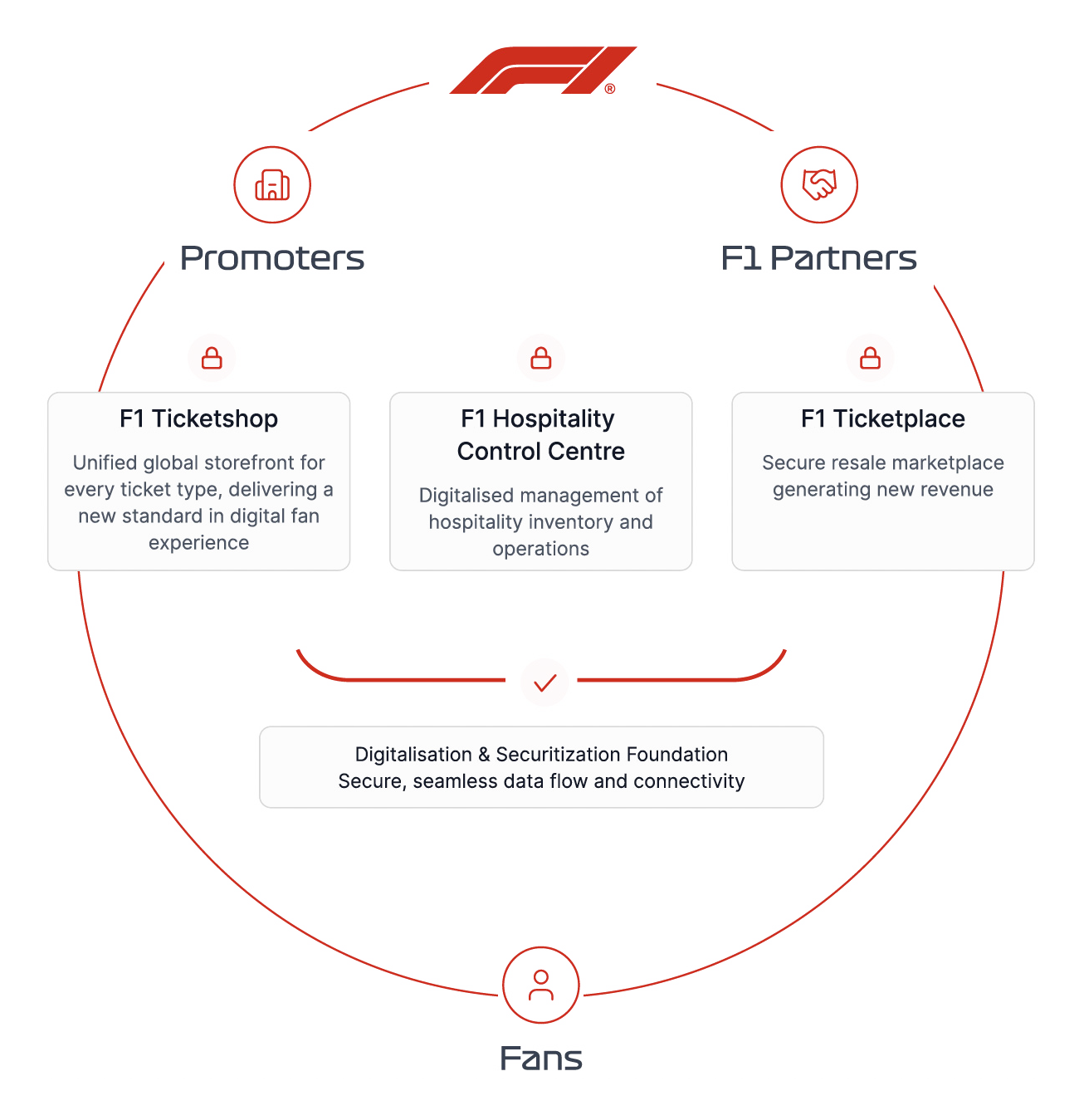
Ecosystem architecture — F1 Ticketshop · Hospitality Control Centre · Ticketplace
Three user types. One coherent product family.
Fans, hospitality operators, and resellers each have completely different mental models and tasks — connected through a single data foundation. The design challenge: make three distinct products feel like one product family, not three separate tools. All under Formula 1's premium visual identity.
Every screen needed to feel production-ready, not conceptual. Three products with distinct information architectures and interaction models, designed simultaneously. Core strategic challenges: aligning B2C and B2B use cases, supporting phased adoption across race organizers, designing graceful fallbacks between 3D and 2D venue systems, ensuring operational scalability for global event distribution.
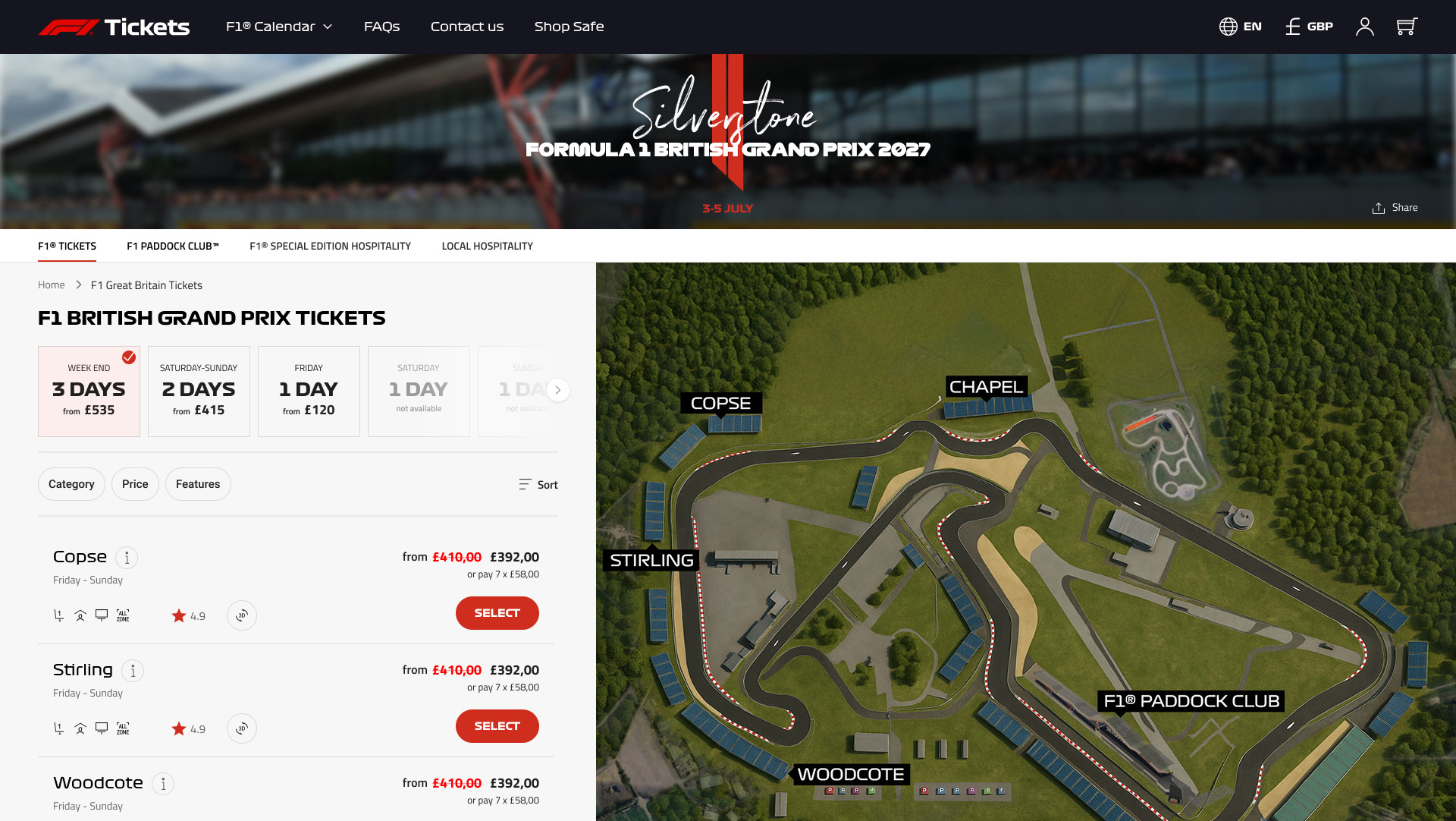
F1 Ticketshop — event listing with 3D venue map
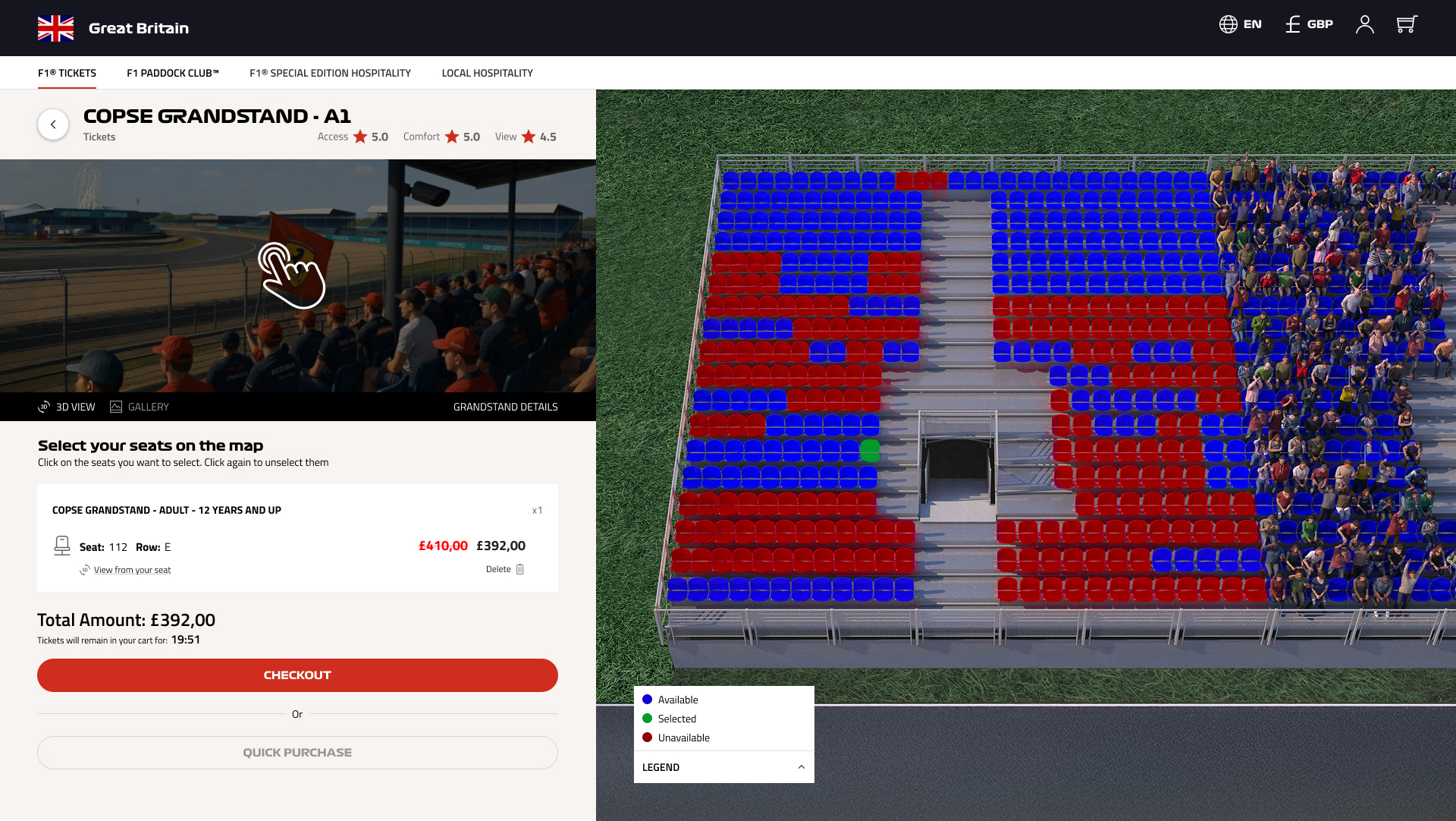
F1 Ticketshop — 3D seat selection, real-time availability
Trust, clarity, and control — at every touchpoint.
For the Ticketshop: the 3D map was the centrepiece. Real emotional engagement comes from seeing your exact seat and its view — not picking from a text list. For the Control Centre: operational clarity. What was previously "call your account manager" becomes a self-service module — speed of product launch and pricing updates was a core KPI. For the Ticketplace: trust signals everywhere. Verified tickets, real-time pricing intelligence, full F1 identity throughout. Zero counterfeit exposure.
Advanced interactive prototypes were produced — motion design, hover states, clickable user flows, transition videos, micro-interactions — to communicate the experience at pitch level with the same credibility as a production product.
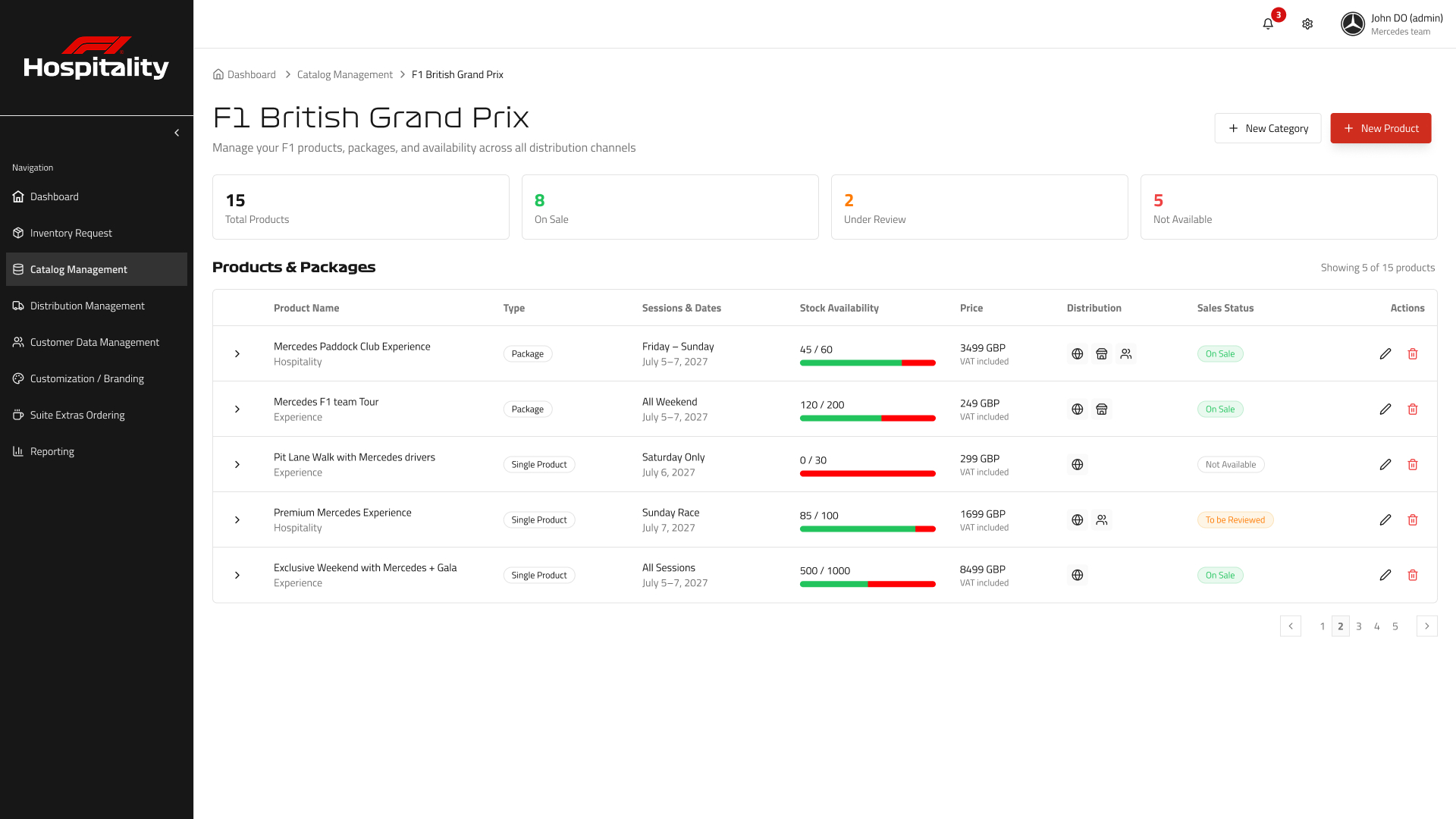
F1 Hospitality Control Centre — inventory and distribution hub
90 slides. Presented to Formula 1 Group. Tender secured.
The RFP was presented to Formula 1 Group in November 2025 — a 90-slide pitch covering ecosystem vision, product architecture, UI design, technology stack, and commercial partnership model. The work demonstrated that Platinium Group could not only operate at F1's global scale, but design the future of how the sport sells tickets.
From the Head of Product's CV: "Secured Formula 1 Group through competitive tender, adding 100M+ EUR in revenue and 60+ events annually." Delivering a pitch of this scope and visual fidelity, in weeks, with a team of four senior stakeholders — that's the kind of constraint that defines what a designer can do when it counts.